

April 2024 — The global nutraceutical market continues to surge, with Omega-3 fatty acids remaining a “star ingredient.” Antarctic krill oil and fish oil, as primary sources, are locked in fierce competition over efficacy, sustainability, and market positioning.
Do you know the difference between Antarctic krill oil and fish oil?
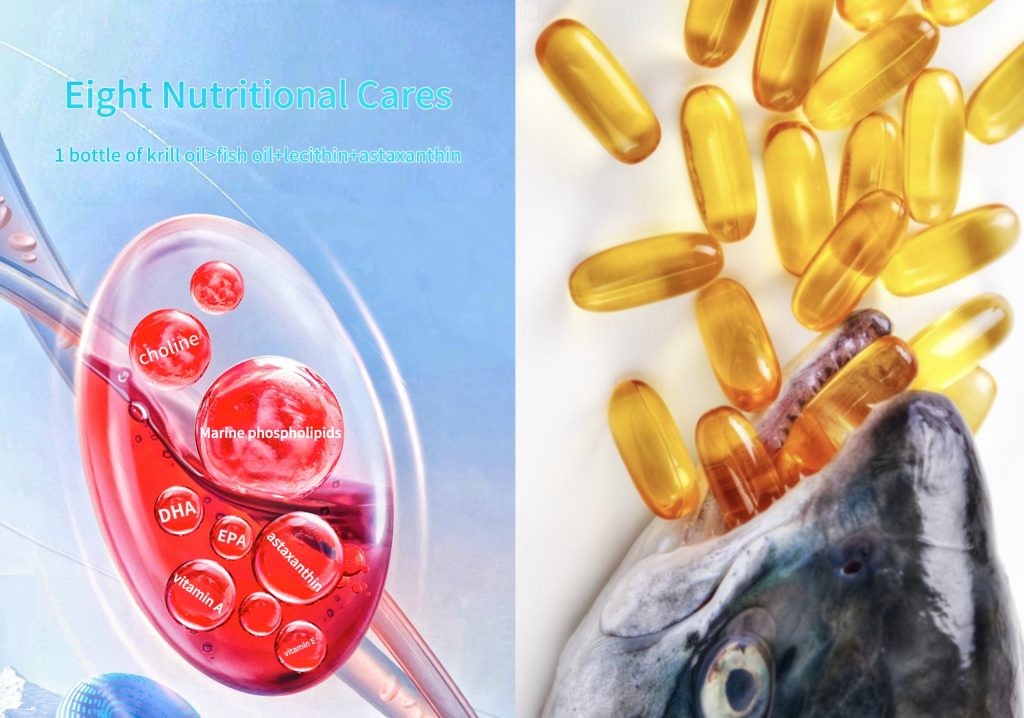
Core Differences: Composition, Absorption, and Added Value
1.Source and Molecular Structure
Fish oil is primarily extracted from deep-sea fish like salmon and sardines, with its Omega-3 (EPA and DHA) existing in triglyceride form. Antarctic krill oil, however, binds Omega-3 to phospholipids, enabling easier cellular absorption. Additionally, krill oil naturally contains astaxanthin—a potent antioxidant—giving it unique anti-inflammatory and anti-aging benefits.
2.Absorption Efficiency Debate
A study in The American Journal of Clinical Nutrition suggests that krill oil’s phospholipid structure allows it to bypass liver metabolism and enter the bloodstream directly, potentially offering 30%-50% higher bioavailability than fish oil.And Antarctic krill oil can be used by pregnant women.However, fish oil advocates argue that high-purity fish oil (e.g., ethyl ester forms) can achieve comparable absorption rates through concentration technologies, often at lower costs.
3.Sustainability and Eco-Certification
Antarctic krill is strictly regulated by the Commission for the Conservation of Antarctic Marine Living Resources (CCAMLR), with annual harvests capped below 1% of total biomass. Krill fishing also boasts a lower carbon footprint. In contrast, traditional fish oil relies on fisheries, some of which face overfishing concerns.
Industry Trends: Innovation Meets Green Consumerism
1.Tech Advancements Enhance Product Profiles
Fish oil producers are adopting molecular distillation to reduce impurities, while krill oil manufacturers optimize cold-extraction techniques to preserve astaxanthin potency.
2.Sustainability Certifications Drive Competition
Consumers increasingly favor “ocean-friendly” labels. Krill oil brands emphasize CCAMLR oversight and minimal ecological disruption in Antarctica, while fish oil companies highlight traceable supply chains to demonstrate compliance.
In short, as research advances and green consumerism grows, these two titans may evolve into complementary forces.
If you are in need of relevant products, you are welcome to contact us:
Shandong Hailongyuan Biotechnology Co., Ltd.
+86 15863060286
sale@hailongyuan.com
