Sea cucumber is known as “ginseng of the seabed”,
Chitosan oligosaccharide is hailed as the Sixth Vital Element,
What amazing things will happen when they meet?
Effects of Chitosan Oligosaccharide on Growth, Immune Response and Disease Resistance of Apostichopus japonicus
Test subjects:
Feeding and growth experiments were conducted for 56 days using Apostichopus japonicus Selenka with an initial body weight of (5.28±0.03) g as experimental subjects.
Experimental Methods:
Five experimental diets were prepared by adding 0, 0.25%, 0.50%, 1.00% and 2.00% chitosan oligosaccharide (COS) to the basal diet, to investigate its effects on growth, immune response and disease resistance of Apostichopus japonicus.
Experimental Data:
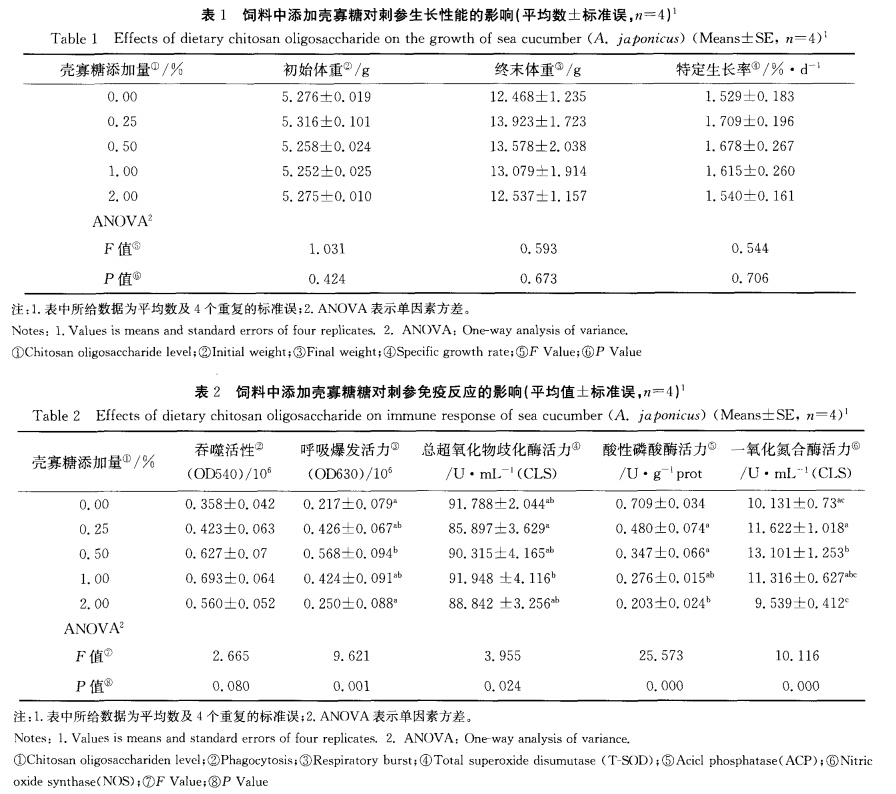
Results showed that:
Dietary chitosan oligosaccharide had no significant effect on the phagocytic activity of coelomocytes in sea cucumber (P>0.05), but significantly enhanced their respiratory burst activity (P<0.05).
Dietary supplementation of 0.50% chitosan oligosaccharide significantly increased nitric oxide synthase activity in coelomocytes of Apostichopus japonicus (P<0.05). The activity of acid phosphatase in coelomocytes showed a decreasing trend, and the 0.50% COS group was significantly lower than the control group (P<0.05).
Comprehensive comparison showed that dietary chitosan oligosaccharide supplementation could promote the growth and resistance against Vibrio splendidus of sea cucumber.
Data Source:
Han L R, Xu W, Wang D F, et al. Effects of chitosan oligosaccharide on growth, immune response and disease resistance of Apostichopus japonicus[J]. Journal of Ocean University of China (Natural Science), 2014, 44(3): 34-39.
Research Unit: College of Food Science and Engineering, Ocean University of China.
Funding: Supported by the National Natural Science Foundation of China (30972289) and Shandong Provincial Natural Science Foundation (ZR2009DM026).
Effects of Dietary Chitosan Oligosaccharide on Product Quality of Apostichopus japonicus
Experimental Methods:
Two groups were established in the culture trial: the control group fed basal diet and the experimental group fed basal diet supplemented with 0.5% chitosan oligosaccharide. The experiment lasted for 8 weeks. The texture characteristics, general nutritional components, fatty acid and amino acid compositions in the body wall of Apostichopus japonicus from both groups were determined and analyzed.
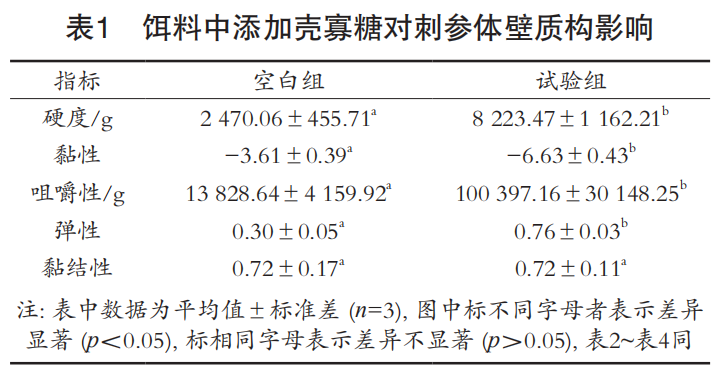
The results showed that compared with the control group, dietary supplementation of 0.5% chitosan oligosaccharide significantly increased the hardness, chewiness and springiness, and significantly decreased the adhesiveness of sea cucumber body wall (p<0.05), thus improving its edible texture.
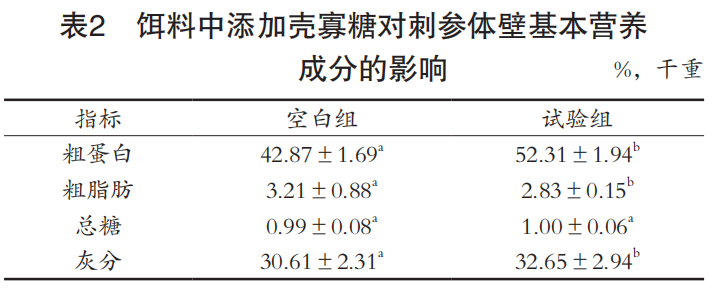
Dietary 0.5% chitosan oligosaccharide increased crude protein content by 22% and decreased crude fat content by 11.8% in sea cucumber body wall (p<0.05).
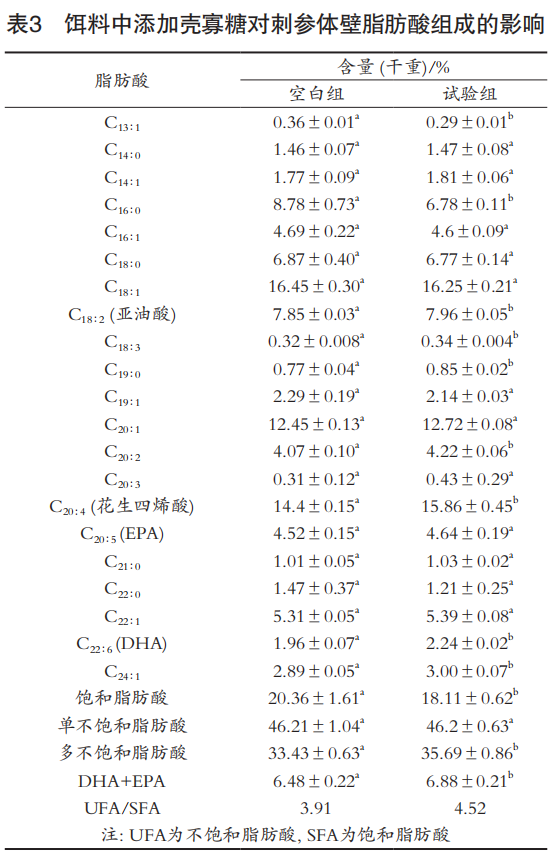
In the experimental group, the content of saturated fatty acids in sea cucumber body wall was 18.11%, which was significantly lower than that in the control group (p<0.05). The content of polyunsaturated fatty acids reached 35.69% and the sum of EPA and DHA was 6.88%, both significantly higher than those of the control group (p<0.05).
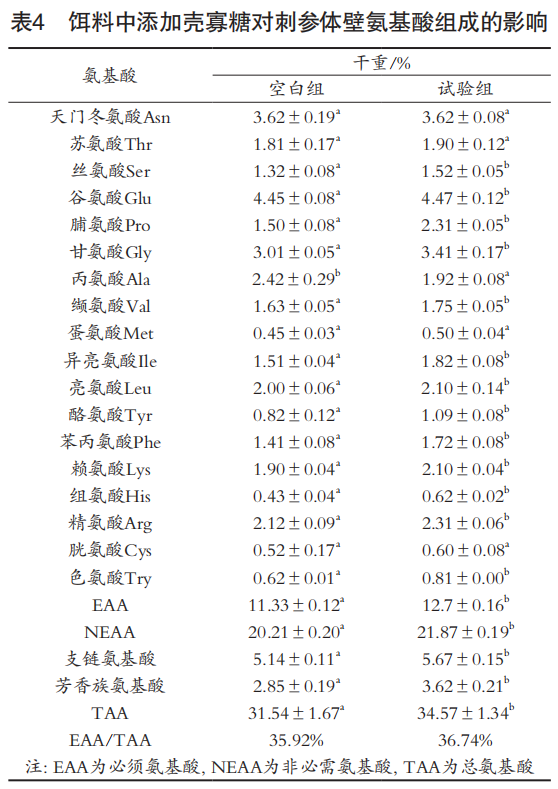
The contents of essential amino acids, non-essential amino acids and total amino acids in sea cucumber body wall of experimental group were 12.7%, 21.87% and 34.57% respectively, with EAA/TAA of 36.74%, all significantly higher than those in the control group (p<0.05), indicating higher nutritional value of sea cucumbers in the experimental group.
The experiment indicated that adding 0.5% chitosan oligosaccharide to feed could improve the product quality of sea cucumbers to a certain extent.
Data Source:
Dong Q, Xiao S, Zhang C X, et al. Effects of dietary chitosan oligosaccharide supplementation on product quality of Apostichopus japonicus[J]. The Food Industry, 2017, 38(9): 119-122.
Effects of Dietary Chitosan Oligosaccharide on Immune Indicators in Intestine, Tentacle, Body Wall and Coelomic Fluid of Apostichopus japonicus
Experimental purpose:
This study aimed to investigate the effects of different supplemental levels of chitosan oligosaccharide on immune parameters in various tissues and coelomic fluid of Apostichopus japonicus.
Experimental Methods:
A total of 225 sea cucumbers with an average body weight of (4.5±0.5) g were selected and randomly divided into the control group, 0.3% and 0.5% chitosan oligosaccharide groups. Each group had three replicates with 25 individuals per replicate, and the feeding trial lasted for 28 days.
The phagocytic rate and phagocytic activity of coelomocytes were determined by somatic cell counting and NBT reduction method. The activities of immune indicators including acid phosphatase (ACP), alkaline phosphatase (AKP), lysozyme (LSZ) and superoxide dismutase (SOD) in intestine, tentacles, body wall and coelomic fluid were measured by ultraviolet spectrophotometry every 7 days.
The results showed that:
Chitosan oligosaccharide supplementation at 0.3% and 0.5% could significantly enhance the phagocytic activity, reactive oxygen species (ROS) level of coelomocytes, as well as the activities of ACP, AKP, LSZ and SOD in Apostichopus japonicus. However, the immune enzyme responses varied among different tissues and coelomic fluid. LSZ activity increased most rapidly in tentacles and body wall, while AKP and ACP changed obviously in intestinal tissue. SOD activity showed the most prominent change and reached the highest level in coelomic fluid. Almost all immune indicators peaked within the first three weeks and then decreased gradually.
Throughout the experiment, the immune indices in the 0.5% chitosan oligosaccharide group were generally higher than those in the 0.3% group, indicating that 0.5% supplementation exerted better immune-enhancing effects.
Data source:
Dang H F, Zhang T, Li R J, et al. Effect of adding chitooligosaccharide on immunological indexes of intestine, tentacles, body wall and coelomic fluid of Apostichopus japonicus[J]. Heilongjiang Animal Science and Veterinary Medicine, 2019, (5): 21-30.
Effects of dietary chitooligosaccharides on intestinal microbiota of Apostichopus japonicus
Experimental Objective:
To study the effects of dietary chitooligosaccharides on intestinal wall microbiota of Apostichopus japonicus
Experimental Methods:
Four levels of chitooligosaccharides including 0.25% (G1), 0.50% (G2), 0.75% (G3) and 1.00% (G4) were added into the basal diet of Apostichopus japonicus, with a control group (G0) established. After 50 days of culture, intestinal wall samples of juvenile sea cucumbers with body weight of (5.03±0.03) g were collected, and high-throughput sequencing was used to analyze the structural characteristics of intestinal wall microbiota.
The results indicated that:
The bacterial diversity and abundance in the intestinal wall of sea cucumbers in chitooligosaccharide supplementation groups were higher than those in the control group.
Proteobacteria and Firmicutes were the dominant phyla in intestinal wall samples of all groups.
Chitooligosaccharides exerted significant effects on the composition of intestinal wall microbiota. Shewanella was the dominant genus in the control group, while its relative abundance decreased in all supplementation groups. The relative abundance of Bacillus was low in the control group, yet increased markedly and even became dominant in chitooligosaccharide groups.
The relative abundance of various genera was relatively low in the 1.00% chitooligosaccharide group, indicating an inhibitory effect of high-concentration chitooligosaccharides.
The study revealed that dietary chitooligosaccharides could elevate the diversity and abundance of intestinal wall bacteria and effectively optimize the intestinal microbiota structure of Apostichopus japonicus.
Data Source:
Si B, Wang Y N, Liu H Y, et al. Effects of dietary chitooligosaccharides on intestinal wall microbiota of Apostichopus japonicus[J]. Journal of Dalian Ocean University, 2017, 32(2): 167-171.
Shandong Hailongyuan has collaborated with the research team of Ocean University of China to develop the internationally advanced DED directional enzymatic hydrolysis technology. In response to market demands, it produces high-quality chitooligosaccharide products with stronger targeting properties and more comprehensive functions, including food-grade, cosmetic-grade, feed-grade and agricultural-grade specifications.