

The difference between Omega-3 in Antarctic krill oil and that in general fish oil is that it exists in the form of phospholipids, which are water-soluble and easier to be absorbed by the human body. Its utilization rate is several times higher than that of fish oil. Therefore, in the field of nutrition and health “krill oil is a natural upgrade substitute for fish oil”.
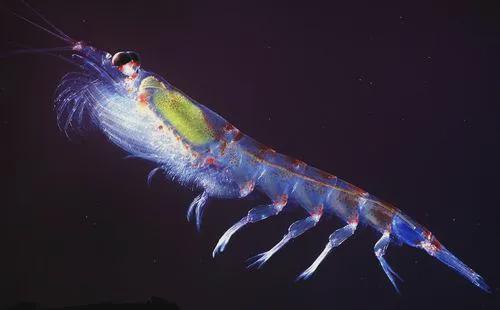
The genome of a tiny Antarctic krill weighing less than 2 grams is 16 times that of a human. It is rich in antioxidants and has earned the reputation of “gold mine at sea”. How does the tiny Antarctic krill achieve great “health energy” and successfully reverse its fortunes?
Antarctic krill: Small but powerful
In 2009, the World Health Organization conducted a nutritional evaluation of 500 natural foods in the world. Antarctic krill won the top score with a perfect score of 100 (among which beef scored 96, milk 91 and prawns 71), and was known as the “king of nutrition”.
Antarctic krill is a high-protein, high-nutrition and mineral-rich Marine animal. It is rich in eight essential amino acids and ten non-essential amino acids required by the human body. Among them, glutamic acid, which represents the nutritional characteristics, is more abundant. In addition, Antarctic krill is also rich in natural selenium elements, DHA, EPA, phospholipids and natural antioxidants such as astaxanthin.

Antarctic krill oil:Rich in phospholipids, Omega-3, DHA, EPA and astaxanthin
Deep-sea fish oil, which has been popular for half a century, is considered the best way to protect blood vessels. But in front of Antarctic krill oil, fish oil seems insignificant.
Because Antarctic krill oil is not only rich in Omega-3 (DHA and EPA), but also rich in nutrients such as phospholipids, choline and astaxanthin.
If you are in need of relevant products, you are welcome to contact us:
Shandong Hailongyuan Biotechnology Co., Ltd.
+86 15163946154
sale@hailongyuan.com
